Why Excel lists stop scaling
Excel works for years on a job-site store until concurrent edits, conflicting filenames and split stock versus cost tabs erode trust. The trigger is rarely one huge count error; it is accumulated issues that never tied to a work order.
Going live is not paste-into-software overnight. Master data, opening balances and daily movement discipline are separate steps. Reper Mass import uses preview before save so you validate before writing.
Pre-migration data cleanup
Cleanup starts with codes: duplicate spellings merge to one item code. Units must be consistent; each versus inner-pack quantity needs its own part card or opening stock multiplies wrongly.
Do not import bin locations before they match physical labels. Blank location rows slow picking on site. Retired codes stay in an archive sheet and out of the load file.
The Mass import engine normalises Turkish decimal commas, yet strip thousand separators before load. Align vendor and manufacturer columns to template headers.
Downloadable templates and column mapping
Mass provides separate templates for parts, bins, opening stock, barcodes, equivalents and suppliers. Each includes a sample row, list validation and a description sheet—safer than inventing columns.
Matching codes update existing cards; only non-empty cells overwrite. Without a code, name matching applies—unique naming matters during cutover.
Eight of eleven definition templates belong to Mass; fuel, hour and oil templates are Axis-only—load stock files for warehouse cutover. The Import menu and list shortcuts hit the same API.
preview mode
With preview mode nothing is written; you get row-level errors and warnings. Commit only after preview looks acceptable.
A five-thousand-row cap and two-hundred-row transaction chunks keep large files controlled. Every commit logs an import audit event.
Common preview failures: unknown unit, duplicate code, missing warehouse, lot columns on non-tracked parts. Fix by row number and re-preview.
Opening stock rules
Opening stock applies only when on-hand is zero for that part and warehouse. Existing movement triggers a warning—use a count session instead.
Tank warehouses are fuel-bridge managed—opening import does not write to TANK bins. Split general warehouse and bin rows in the file.
Tracked lots need lot number and expiry; serial parts expect one serial per unit. Lot columns mean nothing if tracking mode is NONE.
First full physical count
Opening import alone does not retire Excel; the first full count session posts variances. In blind mode counters do not see system quantity before entry.
Minimise movements during cutover week. Note open receipts and transfers on the session. Do not treat a fresh Excel tab as truth mid-count.
Tracked parts require lot on count lines; UI lot picker is still limited—plan those SKUs separately. Cycle count engine can spawn lot lines.
Cutover day plan
Cutover day: final preview, commit, evening movement freeze, next-morning full count. Friday commit plus weekend count reduces clashes.
Archive the old workbook read-only; remove the shared copy or rename it. Otherwise urgent lists return to Excel and dual records start.
After cutover, material requests, receipts and work-order issues run only in Mass. Paper ticket exceptions must be entered next day.
Flow in Reper Mass
In Mass import you download a template, preview, then commit in one dialog. Load opening stock only after definitions succeed.
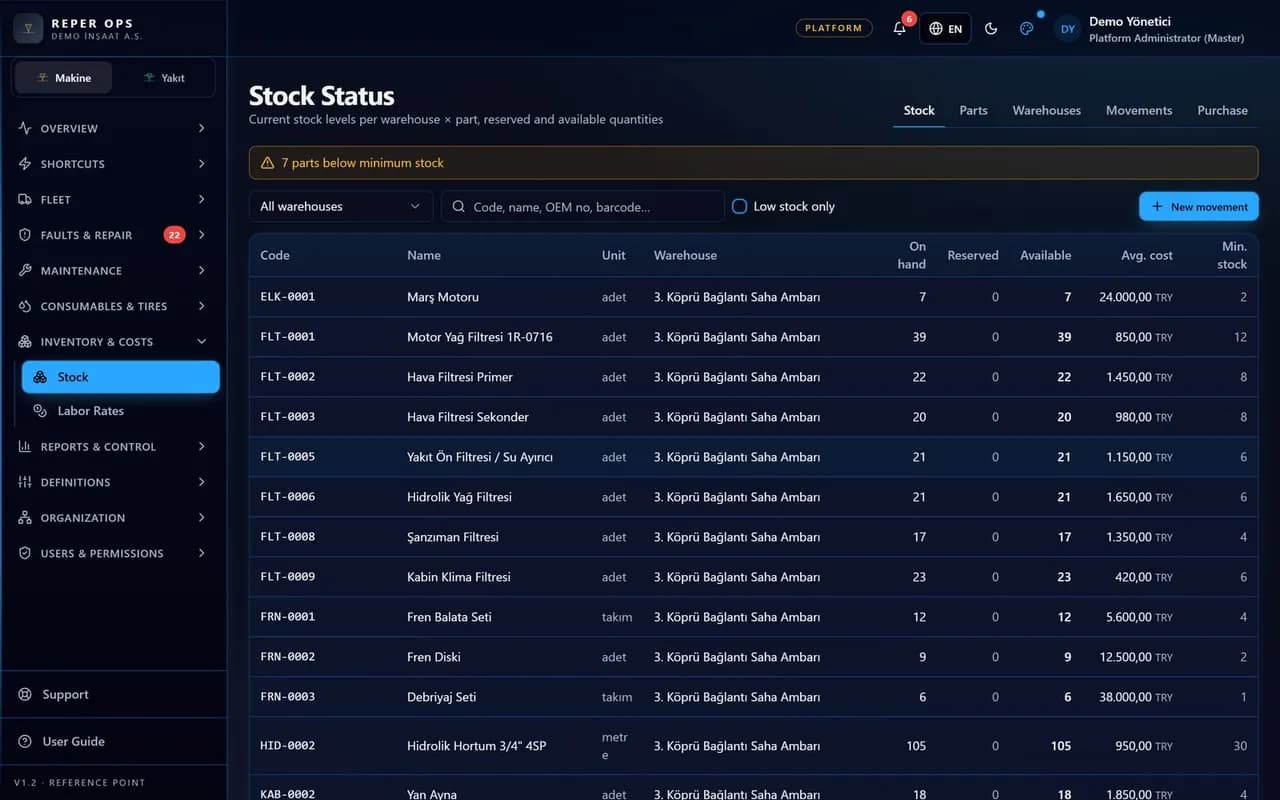
warehouse and inventory management onboarding card tracks units, categories, warehouse and first parts; Excel upload is highlighted. spare parts inventory module ties part card, bin tree and ledger.
Audit trail stores import actions; archiving preview output helps audits.
Roles and migration calendar
The cutover sponsor is the warehouse lead; IT only supports template download and preview archives. Weekly fifteen-minute stand-ups mark definition, opening stock and count steps green or red.
Procurement clears pending receipts during cutover week; unsaved delivery notes are not merged via opening import. The workshop lead commits to Mass work-order issues; paper requisitions are cutover-day exceptions only.
Finance stops using Excel stock value after cutover; saved count session adjustments and weighted average cost are authoritative. Finance checks currency and tax columns in the definition file before commit.
First month after cutover: weekly mini audit of import trail, open count sessions and negative stock. Rhythm moves to biweekly then monthly.
Additional practical notes
Re-uploading the same sheet under a new name without preview does not dedupe; keep filenames in the change log.
Do not rename item codes via import; create the new code and retire the old one or history breaks.
Warehouse master must be committed before bin import; blank warehouse codes fail preview in bulk.
Equivalent import is directional; define reverse equivalents on separate rows.
Barcode import rejects duplicates; remove old labels before commit.
Without supplier-material mapping replenishment lead time stays default seven days—load supplier-material record in migration.
Committing preview warnings needs written risk acceptance archived in the change log.
End cutover week with a read-only ZIP archive; no writable shared copy.
Audit readiness
Auditors get preview commit logs, saved count session sessions and the first movement report after import; Excel stays read-only reference only.