
From timesheet to billing, with nothing left to argue over
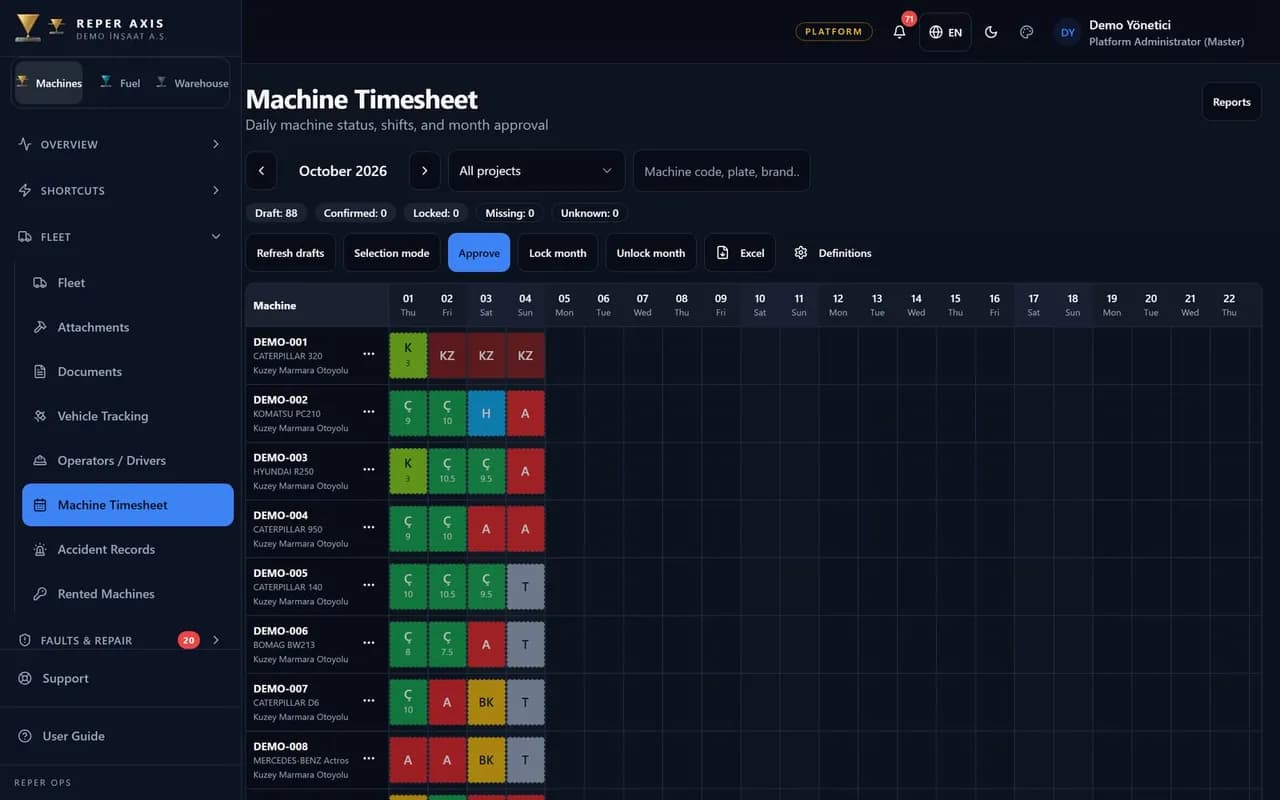
Which days a machine worked, stood idle or was in transit appears in one timesheet. Billing and cost come from that approved record, so the invoice and the reality on site rest on the same number.
How the work flows on site
A draft is created
The daily draft is built from meters, downtime, transfers and operator assignments.
The foreman corrects and approves
Missing days are completed in the field or on screen, and the day is approved.
The month locks
Once every day is approved the month locks and the record no longer changes.
Billing and cost
Period amount and project cost are calculated from approved days.
Modules in this capability
Machine Timesheet
Daily work, downtime and shifts in one timesheet

Automatic daily draft
Engine hours come from the meter series, downtime from records, transfers and operators from assignments. Nobody starts from a blank sheet.

Approval and month lock
Entry and approval permissions are separate. When the month ends, if every day is approved the period locks; locked days cannot be edited afterward.

Status codes
Worked, partial work, breakdown, maintenance, accident, standby, weather, haul, holiday and unknown; the tenant can add its own codes.
Rental Billing and Project Cost
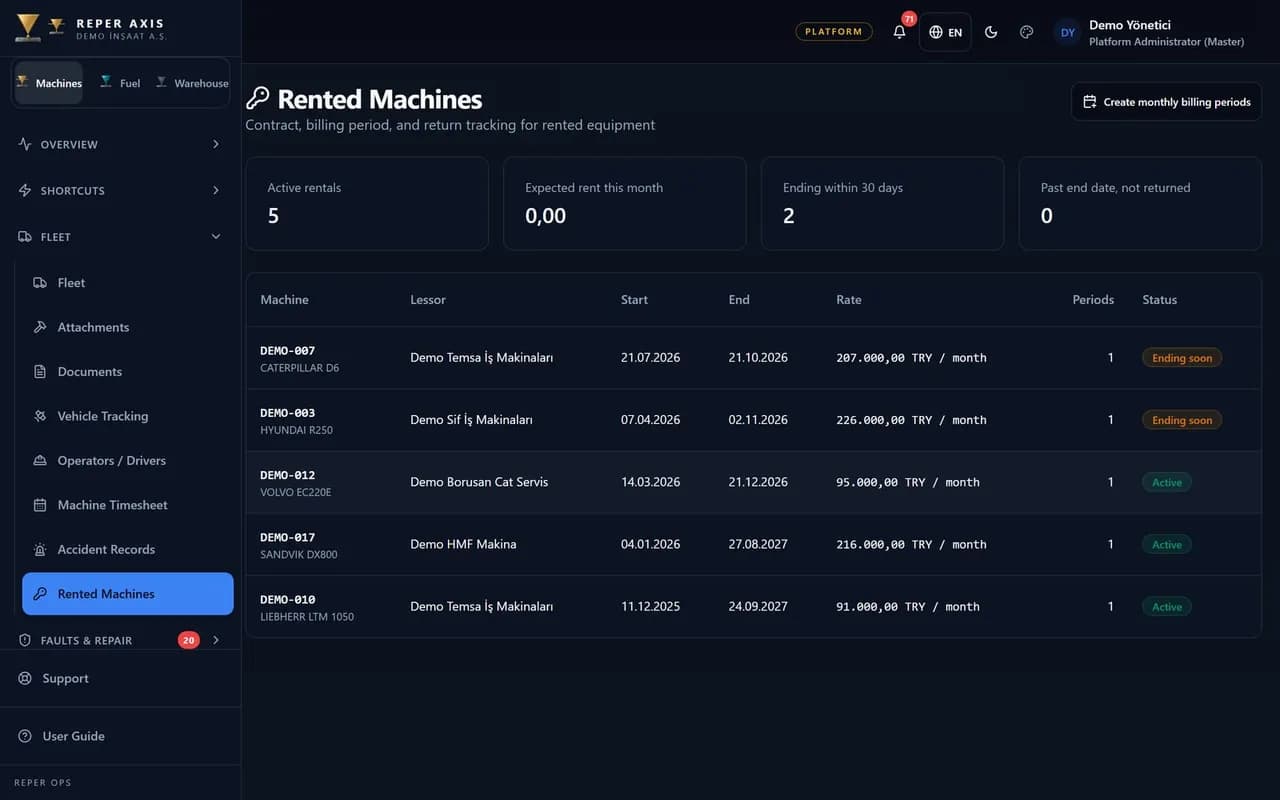
Period billing and project cost from approved timesheet
Timesheet-sourced billing
Rental period totals derive from approved timesheet days; contract dates clip the period automatically.

Deduction rules
Breakdown and maintenance days deduct per contract; accident days may stay outside deductions when liability is on the other party.

Hourly contracts
On hourly rental, minimum hours shrink in proportion to deducted days; partial work days are respected.


Let’s look at it with your machines
Tell us about your fleet and we will show this capability in your scenario.