
Why site fuel tracking is difficult
On paper, fuel tracking is simple: fuel into the tank, fuel issued to machines and fuel left in the tank should reconcile. In the field, refuelling happens at night, the slip goes missing, a bowser tours several sites, the meter is never written down, and at month end nothing agrees.
In most fleets fuel is a bigger line than maintenance and parts combined. Tracking it litre by litre is needed not only to catch theft but to know the true operating cost per machine. Tracking is built in three layers: tank and pump records, consumption per machine, and variance analysis.
Tank and pump records: starting at the source
Start with the inventory: fixed tanks and mobile bowsers listed with their capacities. Then define three movement types: delivery from the supplier into a tank, transfer between tanks, and issue from a tank to a machine. Each is recorded with litres, date, source and destination. Captured without gaps, the tank balance can be calculated at any moment and compared with a physical dip.
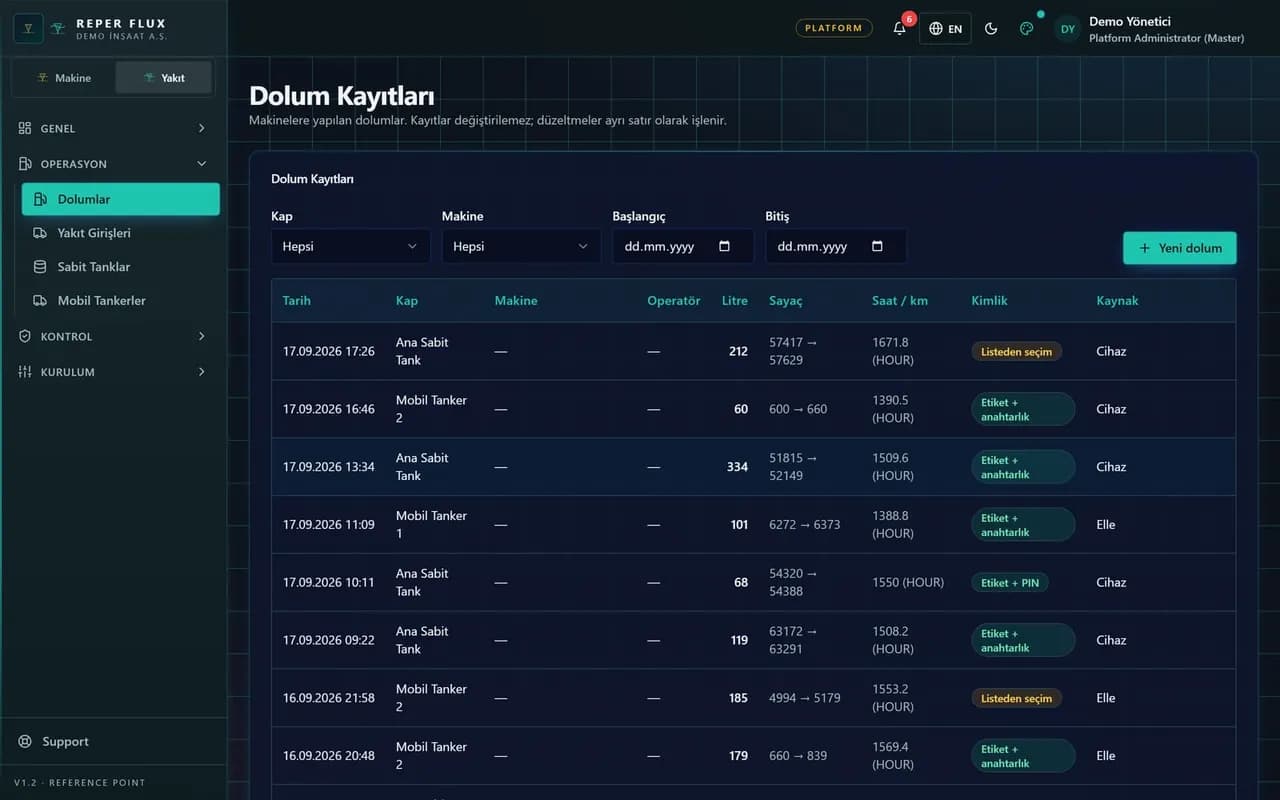
Two fields must be mandatory on a machine refuelling record: litres and the meter reading at that moment. Litres alone mean nothing without the meter, because consumption rests on the hour difference between two fills. Having the operator scan the machine QR code and enter both is faster and more reliable than collecting paper slips.
Litres per hour per machine
The natural measure is litres per operating hour on earthmoving equipment and litres per hundred kilometres on road vehicles. The calculation runs between two consecutive fills: litres issued divided by the meter difference. A single fill can mislead, as the tank may not have been filled completely, so assessment is made on a moving average across several fills.
Comparison is meaningful on two planes. The first is the machine's own history: a clear rise over last month says something has changed. The second is the machine group, since machines of the same class on similar work consume similarly and one that constantly deviates is either operated differently or has a fault.
Telemetry reconciliation and the variance threshold
On machines with telemetry, engine hours and often fuel consumption or tank level come from the provider. Compared with the refuelling record, that allows a reconciliation: litres issued should match the consumption telemetry calculates or the rise in tank level. A gap that will not close points to a wrong record, to fuel that never reached the machine, or to fuel drawn back out of it.
The variance threshold decides which gap raises an alert. Too tight and the alarm sounds on every measurement error until nobody takes it seriously; too wide and real losses pass through. Keep it wide at first, watch the real distribution for a few weeks, then narrow it. Think in both percentage and absolute litres: percentage suits small tanks, litres suit large ones.
Detecting theft and normal loss
Theft and normal loss must be separated. Normal loss comes from evaporation, spillage, measurement tolerance and volume change with temperature, and it is small and steady. Theft is irregular and large and clusters around a particular tank, shift or machine. Watching the gap between tank balance and issued totals by tank and period shows where it builds up.
On the machine side two signals matter: a sudden rise in consumption and an unusually small meter difference between fills. High litres booked to a machine that has barely worked suggests the fuel never reached it. Fuel line and injector faults also raise consumption, so treat a variance alert as a technical check first and an administrative enquiry second.
To separate unexplained gaps between tank balance and physical measurement, work through them step by step and rule out measurement error before treating a gap as loss.
Pump data and device integration
Pump and device integration — which card, how many litres, at what time — lets dispense data flow into the system directly; the connection is set up after technical discovery. Reper Axis covers machine-level consumption, meter readings and variance analysis; it carries litres and hours from the field or telemetry into machine cost.
Fuel stock balances and tank movements are tracked in the tank inventory. Tank litres can be compared to what is posted to each machine; pump-sourced rows join the same picture with a source tag once they arrive. On sites without a pump connection today, the operator enters litres and the meter via QR, and consumption discipline is built on those records.
How Reper Axis does this
In Reper Axis fixed tanks and mobile bowsers sit in the inventory; deliveries, transfers and machine refuellings are recorded and the tank level updates with every transaction. The operator scans the machine QR code, enters litres and the meter reading and selects the tank. Records are compared with telemetry consumption and an alert is raised when the variance threshold is exceeded. Litres per operating hour are tracked by machine and group, tanks below their minimum level raise a notification, pump automation writes dispenses through a device API key without duplicates, and fuel expense flows into cost reports.